



Coral Reefs: Ocean Cities of Life – Marine Biodiversity, Symbiosis & Climate Survival Systems

Coral Reefs: Ocean Cities of Life – Marine Biodiversity, Symbiosis & Climate Survival Systems

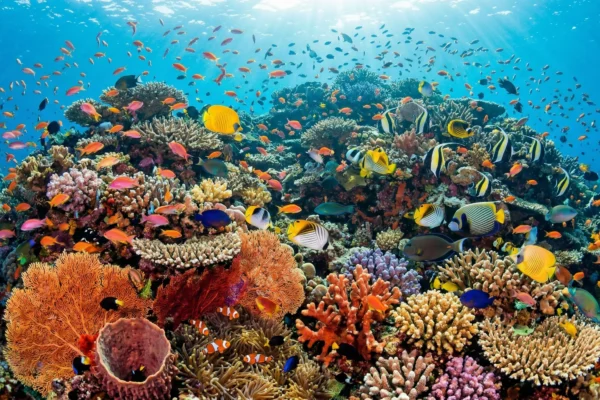
Coral reefs are among the most biologically rich and ecologically important ecosystems on Earth. Often called the “rainforests of the sea,” they are not made of plants or rocks, but of living colonies of tiny animals called coral polyps. These organisms build massive calcium carbonate structures over thousands of years, forming complex underwater cities that…
Read More
The Immune System: Biological Defense Network – Cells, Antibodies & Disease Protection Systems

The Immune System: Biological Defense Network – Cells, Antibodies & Disease Protection Systems

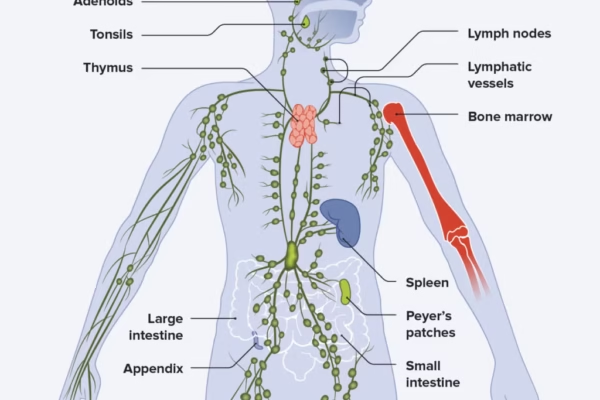
The immune system is the body’s highly advanced biological defense network, responsible for identifying, neutralizing, and eliminating harmful invaders such as bacteria, viruses, parasites, and abnormal cells. It operates as a constantly active surveillance system that distinguishes between “self” and “non-self,” protecting the organism from infection while maintaining internal stability. Unlike a single organ, the…

Read More
Soil Ecosystems: Hidden Life Underground – Microbes, Nutrients, Decomposition & Earth’s Living Engine

Soil Ecosystems: Hidden Life Underground – Microbes, Nutrients, Decomposition & Earth’s Living Engine

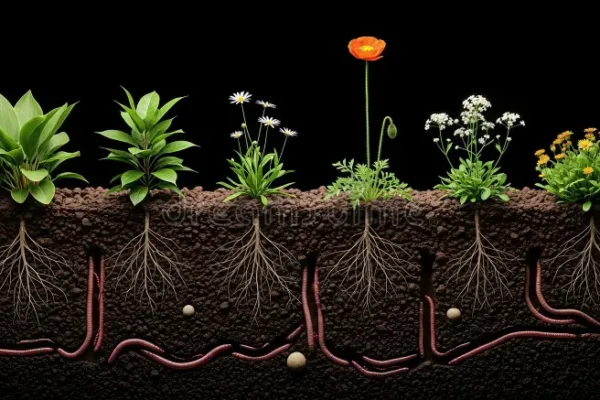
Soil ecosystems are one of the most complex and least visible biological systems on Earth because beneath every forest, field, and grassland exists an active underground world filled with microbes, fungi, insects, organic matter, and chemical processes that continuously recycle nutrients and support all terrestrial life, and unlike surface ecosystems that are easy to observe,…

Read More
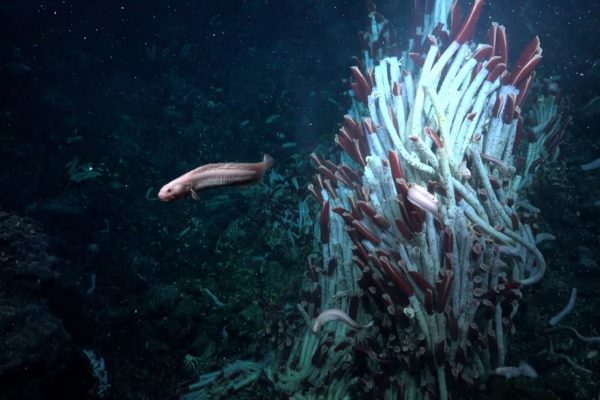
Deep Ocean Ecosystems: Extreme Survival – Hydrothermal Vents, Pressure Biology & Alien-Like Life Systems

Deep Ocean Ecosystems: Extreme Survival – Hydrothermal Vents, Pressure Biology & Alien-Like Life Systems

Deep ocean ecosystems represent one of the most extreme and least explored environments on Earth. Beneath the sunlit surface layer of the ocean lies a vast dark world where sunlight never reaches, temperatures approach freezing, and pressure becomes hundreds of times greater than at sea level. Despite these harsh conditions, life not only exists in…

Read More
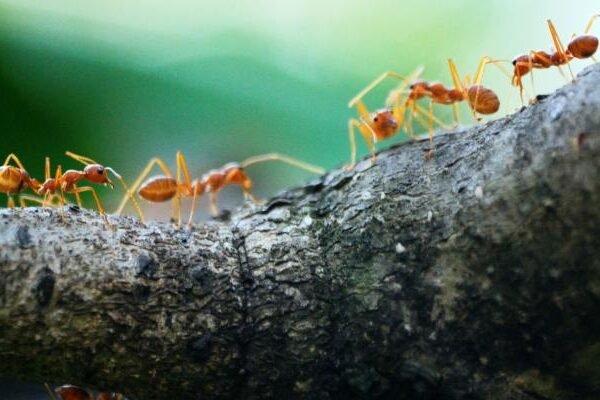
Insect Superorganisms: Ants, Bees & Termites – Collective Intelligence, Colony Science & Survival Systems

Insect Superorganisms: Ants, Bees & Termites – Collective Intelligence, Colony Science & Survival Systems

Insect superorganisms are among the most advanced biological systems in nature because they function not as individual insects but as unified living societies where thousands or even millions of members behave like a single coordinated entity, and unlike solitary animals that depend on individual intelligence, insects such as ants, bees, and termites achieve survival through…

Read More
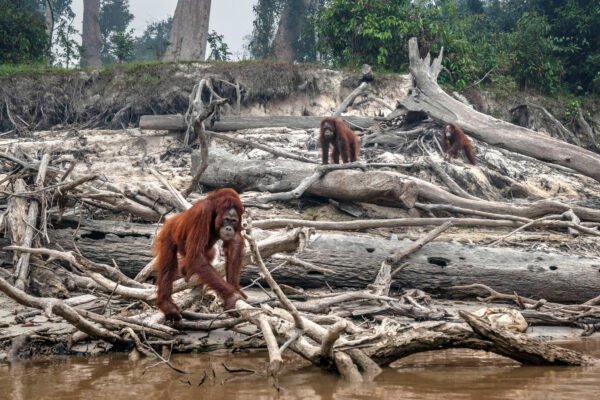
Human Impact on Ecosystems: Deforestation, Climate Change & Biodiversity Collapse

Human Impact on Ecosystems: Deforestation, Climate Change & Biodiversity Collapse

Human activity has become one of the strongest forces shaping Earth’s ecosystems because industrial development, agriculture expansion, urbanization, and resource extraction have fundamentally changed natural landscapes at a global scale, and unlike slow natural ecological changes that occur over thousands of years, human-driven changes often happen within decades, giving ecosystems very little time to adapt,…

Read More
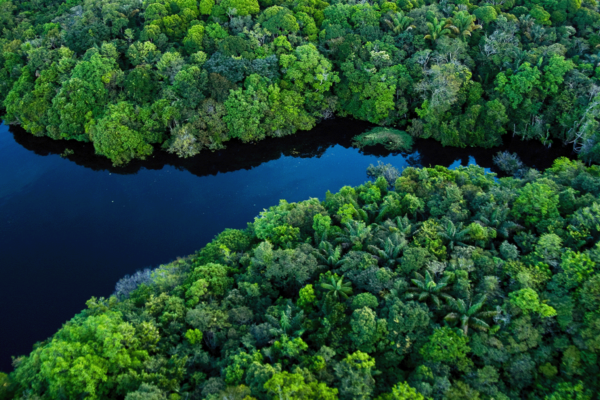
Rainforest Biodiversity: Hidden Ecosystems – Survival Networks, Rare Species & Natural Balance

Rainforest Biodiversity: Hidden Ecosystems – Survival Networks, Rare Species & Natural Balance

Rainforests are among the most biologically complex ecosystems on Earth because they contain an extremely dense concentration of life forms interacting through hidden survival networks, and unlike simpler ecosystems where a few species dominate, rainforests operate as multilayered biological systems where plants, animals, fungi, insects, and microorganisms coexist in tightly connected relationships, creating one of…

Read More
Lavender Flower: Medical Benefits, Uses, and Healing Properties

Lavender Flower: Medical Benefits, Uses, and Healing Properties

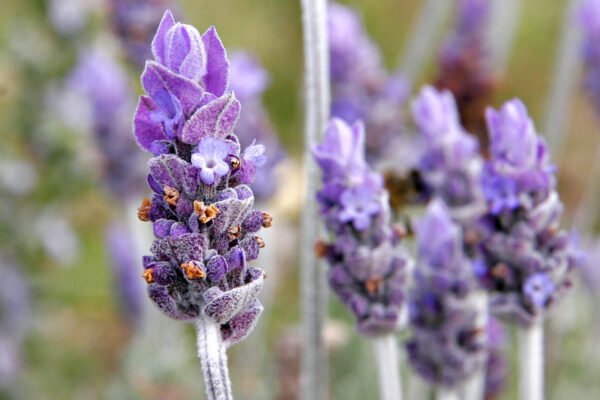
The Lavender is one of the most widely recognized medicinal flowers in natural healing traditions. Known for its calming fragrance and vibrant purple blossoms, lavender has been used for centuries to promote relaxation, improve sleep, relieve stress, and support overall wellness. Its therapeutic value comes from its essential oils, antioxidants, and anti-inflammatory compounds. Lavender contains…

Read More
DNA: Blueprint of Life – Genetic Coding, Evolution & Molecular Inheritance Systems

DNA: Blueprint of Life – Genetic Coding, Evolution & Molecular Inheritance Systems

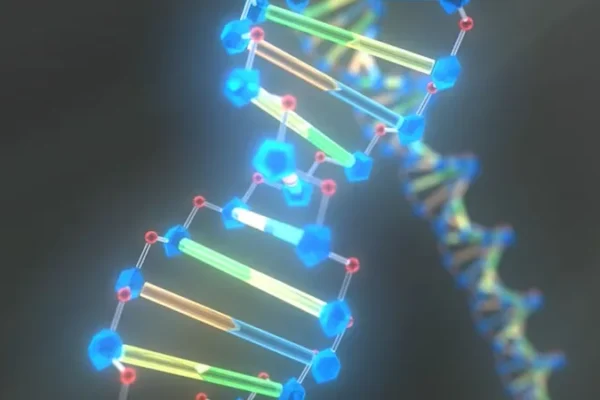
DNA (Deoxyribonucleic Acid) is the fundamental biological molecule that carries the genetic instructions for all known living organisms. It functions as a molecular blueprint that defines how cells grow, develop, function, and reproduce. Every living organism—from microscopic bacteria to complex humans—is built and regulated using information encoded within DNA. DNA is not just a static…

Read More