





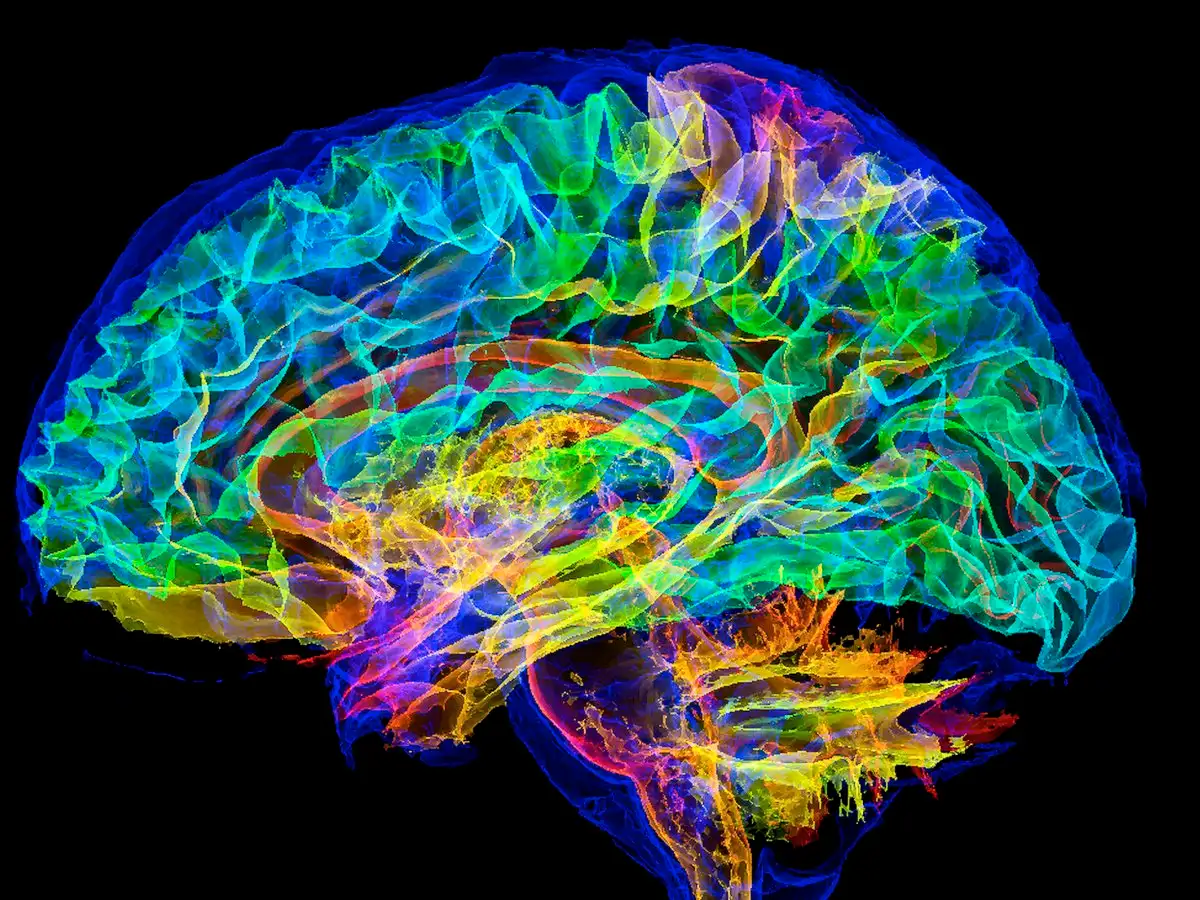
The human brain is the most complex biological structure known in the natural world. Containing roughly 86 billion neurons and trillions of synaptic connections, it functions as the central control system for thought, emotion, movement, memory, perception, and consciousness. Unlike any artificial machine, the brain continuously rewires itself, adapts to experience, and constructs subjective reality from electrical and chemical signals.
Modern neuroscience studies the brain not only as a biological organ, but also as an information-processing system, a prediction engine, and a self-organizing network. Every decision, memory, emotion, and perception emerges from dynamic interactions between neurons firing in intricate patterns.
This deep guide explores brain structure, neural communication, memory systems, consciousness, cognition, intelligence, emotion, and survival mechanisms in detailed scientific depth.
Brain Structure and Functional Organization
The brain is divided into specialized regions, each responsible for different functions.
Cerebrum
The cerebrum is the largest part of the brain and controls:
- Thinking
- Reasoning
- Memory
- Voluntary movement
- Sensory interpretation
It is divided into two hemispheres:
- Left hemisphere (analytical, language processing)
- Right hemisphere (spatial awareness, creativity)
Cerebral Cortex
The outer layer of the brain, called the cortex, is responsible for higher-order processing:
- Decision-making
- Problem-solving
- Language comprehension
Its folded structure increases surface area, allowing more neurons to fit inside the skull.
Cerebellum
The cerebellum controls:
- Balance
- Coordination
- Fine motor skills
- Timing of movements
Without it, even simple physical actions would become unstable.
Brainstem
The brainstem manages essential survival functions:
- Breathing
- Heart rate
- Sleep cycles
- Reflex responses
It connects the brain to the spinal cord and ensures basic life processes continue automatically.
Neurons and Electrical Signaling System
The brain operates through neurons, specialized cells that transmit information.
Structure of a Neuron
Each neuron consists of:
- Dendrites (receive signals)
- Cell body (processes information)
- Axon (transmits signals)
Electrical Impulses
Neurons communicate using:
- Electrical impulses called action potentials
- Chemical messengers called neurotransmitters
Signals travel across synapses, tiny gaps between neurons.
Synaptic Transmission
When a signal reaches a synapse:
- Neurotransmitters are released
- They bind to receptors on the next neuron
- The signal continues or is modified
This system forms the basis of all brain activity.
Neurotransmitters and Chemical Control
Brain function depends heavily on chemical signaling molecules.
Dopamine
Dopamine is involved in:
- Motivation
- Reward processing
- Learning reinforcement
It plays a major role in habit formation.
Serotonin
Serotonin regulates:
- Mood stability
- Sleep cycles
- Emotional balance
Acetylcholine
Acetylcholine controls:
- Memory formation
- Attention
- Muscle activation
Glutamate and GABA
- Glutamate: Excitatory signaling (activates neurons)
- GABA: Inhibitory signaling (calms neural activity)
Balance between these chemicals is essential for brain stability.
Memory Systems and Learning Architecture
Memory is not stored in one location but distributed across neural networks.
Short-Term Memory
Short-term memory holds:
- Information for seconds to minutes
- Limited capacity
It is used for immediate tasks like calculations and conversations.
Long-Term Memory
Long-term memory stores:
- Experiences
- Knowledge
- Skills
It can last a lifetime.
Hippocampus Function
The hippocampus is critical for:
- Converting short-term memory into long-term storage
- Spatial navigation
- Learning new information
Damage to this region severely affects memory formation.
Memory Consolidation
During sleep:
- The brain reorganizes experiences
- Strengthens important neural pathways
- Removes unnecessary information
Consciousness and Self-Awareness
Consciousness is one of the most complex scientific mysteries.
Definition
Consciousness refers to:
- Awareness of self
- Awareness of environment
- Subjective experience
Neural Correlates
Scientists believe consciousness arises from:
- Large-scale neural network interactions
- Integrated information processing
The Binding Problem
The brain combines:
- Visual data
- Sound
- Touch
- Emotion
Into a single unified experience, though these signals are processed in different regions.
Perception and Sensory Processing
The brain constructs reality from sensory input.
Visual System
Eyes capture light, but:
- The brain interprets shapes, depth, and color
- Creates a stable visual world
Auditory System
Sound waves are converted into:
- Frequency patterns
- Meaningful speech recognition
Multisensory Integration
The brain merges:
- Vision
- Sound
- Touch
To form coherent experience.
Emotion and Limbic System
Emotions are biological survival mechanisms.
Amygdala
The amygdala processes:
- Fear
- Threat detection
- Emotional memory
Hypothalamus
Controls:
- Hormone release
- Hunger
- Temperature regulation
Emotional Learning
Emotions help the brain:
- Prioritize survival decisions
- Strengthen memory retention
- Guide behavior
Intelligence and Cognitive Function
Human intelligence emerges from complex neural interactions.
Problem Solving
The brain can:
- Analyze patterns
- Predict outcomes
- Generate solutions
Abstract Thinking
Humans uniquely process:
- Mathematics
- Language
- Philosophy
Neural Plasticity
The brain continuously adapts:
- Forms new connections
- Strengthens repeated pathways
- Weakens unused circuits
This is the basis of learning.
Sleep and Brain Restoration
Sleep is essential for brain function.
REM Sleep
During REM:
- Dreams occur
- Memory processing increases
- Emotional regulation happens
Non-REM Sleep
Supports:
- Physical brain recovery
- Neural maintenance
Glymphatic System
During sleep:
- The brain removes waste products
- Clears metabolic toxins
Brain Energy Consumption
Despite its small size, the brain uses significant energy.
Metabolic Demand
The brain consumes:
- About 20% of the body’s energy
Continuous Activity
Even at rest:
- Neural networks remain active
- Background processing continues
Brain Disorders and Dysfunction
Brain health is sensitive to disruption.
Neurodegenerative Diseases
Conditions include:
- Alzheimer’s disease
- Parkinson’s disease
These affect memory, movement, and cognition.
Mental Health Disorders
Imbalances in brain chemistry can lead to:
- Anxiety
- Depression
- Cognitive dysfunction
Evolution of the Human Brain
The human brain evolved over millions of years.
Expansion of Cortex
Humans developed:
- Larger prefrontal cortex
- Enhanced reasoning ability
Social Intelligence
Evolution favored:
- Communication skills
- Cooperation
- Emotional understanding
Future of Brain Science
Neuroscience is rapidly advancing.
Brain Mapping
Scientists aim to:
- Map every neural connection
- Understand full brain architecture
Brain-Computer Interfaces
Technology may allow:
- Direct communication between brain and machines
- Restoration of lost functions
Conclusion
The human brain is a biological masterpiece that generates thought, emotion, memory, and consciousness through complex neural networks. It is not only an organ of survival but also the foundation of identity, intelligence, and experience.
Every moment of awareness arises from billions of electrical and chemical interactions, forming the most advanced information-processing system known in nature. As neuroscience progresses, understanding the brain may unlock deeper insights into consciousness itself and redefine what it means to be human.