





DNA (Deoxyribonucleic Acid) is the fundamental biological molecule that carries the genetic instructions for all known living organisms. It functions as a molecular blueprint that defines how cells grow, develop, function, and reproduce. Every living organism—from microscopic bacteria to complex humans—is built and regulated using information encoded within DNA.
DNA is not just a static storage system; it is a dynamic, self-replicating information structure that evolves over time. It is responsible for heredity, biological diversity, adaptation, and evolution. Modern biology, medicine, genetics, and biotechnology all rely on understanding DNA’s structure and function.
This guide explores DNA structure, genetic coding, replication mechanisms, mutation processes, inheritance systems, evolutionary biology, and modern genetic engineering in scientific depth.
Molecular Structure of DNA
DNA is a long polymer made of repeating units called nucleotides.
Nucleotide Composition
Each nucleotide contains:
- A sugar molecule (deoxyribose)
- A phosphate group
- A nitrogenous base
The four nitrogenous bases are:
- Adenine (A)
- Thymine (T)
- Cytosine (C)
- Guanine (G)
These bases carry genetic information through their specific sequences.
Double Helix Structure
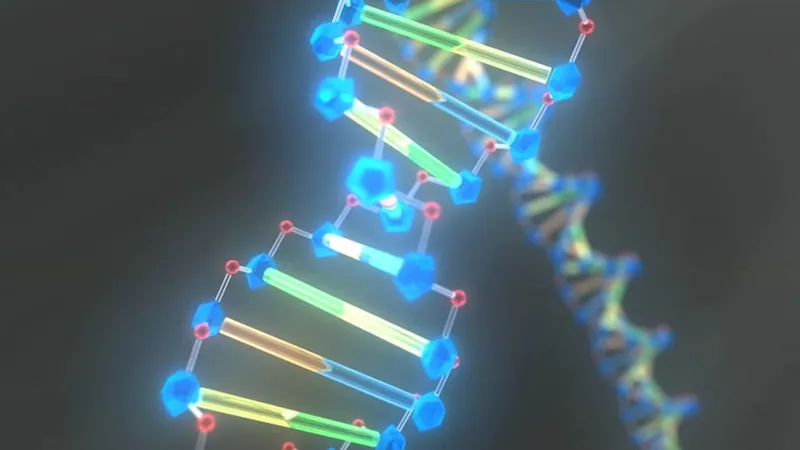
DNA forms a double helix shape:
- Two strands twisted around each other
- Strands held together by base pairing
Base pairing rules:
- A pairs with T
- C pairs with G
This structure provides stability and allows accurate replication.
Genetic Coding and Information Storage
DNA functions as a biological coding system.
Codons and Protein Synthesis
Groups of three bases form codons:
- Each codon codes for a specific amino acid
- Amino acids combine to form proteins
Proteins determine:
- Cell structure
- Enzyme activity
- Biological function
Gene Structure
A gene is a segment of DNA that contains instructions for:
- Protein production
- Regulatory functions
Genes act as functional units of heredity.
Non-Coding DNA
Not all DNA codes for proteins. Some regions:
- Regulate gene activity
- Control expression timing
- Support structural organization
DNA Replication and Cellular Division
DNA must be copied accurately during cell division.
Replication Process
DNA replication occurs in several steps:
- The double helix unwinds
- Each strand serves as a template
- New complementary strands are formed
Enzymes Involved
Key enzymes include:
- Helicase (unzips DNA strands)
- DNA polymerase (builds new strands)
- Ligase (joins fragments together)
Accuracy and Proofreading
DNA polymerase has error-checking ability:
- Corrects mismatched bases
- Ensures genetic stability
Mutations and Genetic Variation
Mutations are changes in DNA sequences.
Types of Mutations
- Point mutations (single base changes)
- Insertions (extra bases added)
- Deletions (bases removed)
Causes of Mutations
Mutations can occur due to:
- DNA replication errors
- Radiation exposure
- Chemical damage
- Environmental stress
Biological Impact
Mutations may be:
- Harmful (disease-causing)
- Neutral (no effect)
- Beneficial (driving evolution)
Inheritance and Genetic Transmission
DNA is passed from parents to offspring.
Chromosomes
DNA is organized into chromosomes:
- Humans have 46 chromosomes
- 23 inherited from each parent
Alleles
Genes can exist in different forms called alleles:
- Dominant alleles express traits
- Recessive alleles are masked
Genetic Variation
Variation arises through:
- Sexual reproduction
- Genetic recombination
- Mutation
Protein Synthesis and Cellular Function
DNA controls protein production through two main stages.
Transcription
- DNA is copied into RNA
- Occurs in the cell nucleus
Translation
- RNA is used to build proteins
- Occurs in ribosomes
Proteins then determine cellular behavior and structure.
DNA and Evolutionary Biology
DNA is the foundation of evolution.
Natural Selection
Genetic variations influence survival:
- Beneficial traits increase reproduction
- Harmful traits are eliminated over time
Genetic Drift
Random changes in DNA frequency:
- Occur in small populations
- Affect genetic diversity
Speciation
Over time, genetic changes can lead to:
- Formation of new species
- Evolutionary divergence
Epigenetics and Gene Regulation
Not all DNA activity is fixed.
Gene Expression Control
Genes can be:
- Activated
- Suppressed
- Modified
Epigenetic Mechanisms
Changes occur without altering DNA sequence:
- DNA methylation
- Histone modification
Environmental Influence
Lifestyle and environment can affect:
- Gene activity
- Health outcomes
- Development patterns
DNA Damage and Repair Systems
Cells constantly repair DNA damage.
Repair Mechanisms
Cells use systems like:
- Base excision repair
- Nucleotide excision repair
- Mismatch repair
Importance of Repair
Without repair:
- Mutations accumulate
- Cancer risk increases
- Cellular function declines
Genetic Engineering and Biotechnology
Modern science can modify DNA.
Gene Editing
Techniques like CRISPR allow:
- Precise DNA modification
- Gene insertion or removal
Applications
Genetic engineering is used in:
- Medicine
- Agriculture
- Disease research
Ethical Considerations
Genetic modification raises questions about:
- Safety
- Long-term effects
- Biological ethics
DNA in Medicine and Disease
DNA plays a major role in human health.
Genetic Disorders
Caused by DNA mutations:
- Cystic fibrosis
- Sickle cell anemia
- Huntington’s disease
Cancer Biology
Cancer often results from:
- DNA damage
- Uncontrolled cell growth
Personalized Medicine
DNA analysis helps:
- Tailor treatments
- Predict disease risk
- Improve diagnostics
Ancient DNA and Evolutionary History
DNA can reveal evolutionary past.
Fossil DNA Analysis
Scientists extract DNA from ancient remains:
- Study extinct species
- Trace evolutionary lineages
Human Evolution
DNA comparisons show:
- Relationship with other primates
- Migration patterns of ancient humans
DNA Storage and Future Technology
DNA is being explored as a data storage medium.
Information Density
DNA can store:
- Massive amounts of digital data
- In extremely small space
Stability
DNA can remain stable for:
- Thousands of years under proper conditions
Future Applications
Potential uses include:
- Biological data storage systems
- Synthetic life design
- Advanced computing systems
Conclusion
DNA is the fundamental code of life, governing biological structure, function, and evolution across all living organisms. Its double-helix structure encodes information that determines how proteins are built, how traits are inherited, and how species evolve over time.
Beyond biology, DNA connects genetics, medicine, evolution, and biotechnology into a unified scientific framework. As research advances, DNA continues to reveal deeper insights into life itself and opens possibilities for medical breakthroughs, genetic engineering, and future biotechnological innovation.