

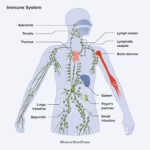
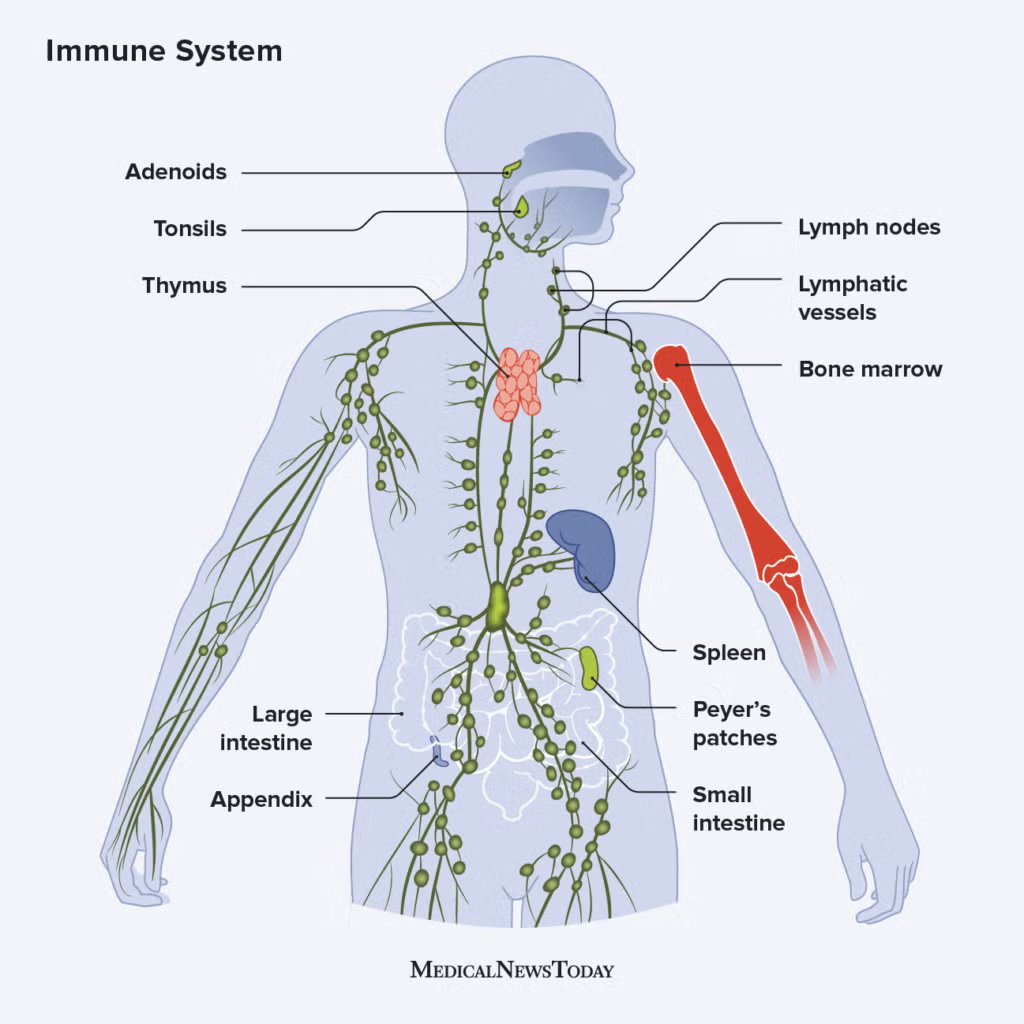
The immune system is the body’s highly advanced biological defense network, responsible for identifying, neutralizing, and eliminating harmful invaders such as bacteria, viruses, parasites, and abnormal cells. It operates as a constantly active surveillance system that distinguishes between “self” and “non-self,” protecting the organism from infection while maintaining internal stability.
Unlike a single organ, the immune system is a distributed network made up of specialized cells, tissues, organs, and signaling molecules working together in real time. It has memory, adaptability, and learning capability, allowing it to respond faster and more effectively after repeated exposure to pathogens.
Modern immunology studies this system as both a biological defense mechanism and an adaptive information-processing network. Its behavior resembles a complex security system with detection, response, memory storage, and coordinated attack strategies.
This guide explores immune system structure, cell types, defense mechanisms, antibody function, inflammation, vaccination, autoimmune disorders, and disease protection science in depth.
Organization of the Immune System
The immune system is divided into two main functional layers.
Innate Immune System
The innate immune system is the body’s first line of defense:
- Rapid response (minutes to hours)
- Non-specific targeting
- Present from birth
It includes physical barriers and general immune cells that attack anything recognized as foreign.
Adaptive Immune System
The adaptive immune system is slower but highly precise:
- Targets specific pathogens
- Builds immune memory
- Improves response over time
It is responsible for long-term immunity after infection or vaccination.
Physical Barriers and First-Line Defense
Before immune cells activate, the body uses structural defenses.
Skin Barrier
The skin prevents pathogen entry through:
- Tough keratin layers
- Antimicrobial secretions
- Constant cell renewal
Mucous Membranes
Found in:
- Respiratory tract
- Digestive system
- Reproductive system
They trap and remove harmful particles.
Chemical Defenses
The body produces:
- Stomach acid to kill microbes
- Enzymes in saliva and tears
- Antibacterial proteins
White Blood Cells and Immune Cell Types
White blood cells (leukocytes) are the core of immune defense.
Neutrophils
Neutrophils are rapid-response cells that:
- Attack bacteria
- Engulf pathogens through phagocytosis
- Act as first responders during infection
Macrophages
Macrophages are larger immune cells that:
- Consume pathogens and debris
- Signal other immune cells
- Clean infected tissues
Lymphocytes
Lymphocytes include:
- B cells (produce antibodies)
- T cells (destroy infected cells)
They form the adaptive immune system.
Antibodies and Targeted Defense
Antibodies are specialized proteins that identify specific pathogens.
Structure of Antibodies
Antibodies have:
- Variable regions (bind to antigens)
- Constant regions (signal immune response)
Antigen Recognition
Each antibody binds to a specific antigen:
- Antigens are molecular markers on pathogens
- Binding triggers immune response
Neutralization Process
Antibodies protect the body by:
- Blocking pathogen entry into cells
- Marking pathogens for destruction
- Preventing replication
T Cells and Cellular Immunity
T cells are responsible for direct immune attacks.
Helper T Cells
Helper T cells:
- Activate other immune cells
- Coordinate immune responses
- Release signaling chemicals called cytokines
Killer T Cells
Killer T cells:
- Destroy infected or abnormal cells
- Induce programmed cell death (apoptosis)
Memory T Cells
Memory T cells:
- Retain information about past infections
- Enable faster response in future exposure
Immune Memory and Long-Term Protection
The immune system can “remember” pathogens.
Memory Cells
After infection:
- Some B and T cells become memory cells
- These remain in the body long-term
Secondary Response
Upon reinfection:
- Immune response is faster
- Antibodies are produced rapidly
- Infection is often prevented or reduced
Inflammation and Healing Response
Inflammation is a protective biological response.
Purpose of Inflammation
It helps:
- Isolate infection
- Remove damaged cells
- Promote healing
Physical Signs
Inflammation includes:
- Redness
- Heat
- Swelling
- Pain
Chemical Signals
Immune cells release:
- Histamines
- Cytokines
These chemicals regulate immune activity.
Vaccination and Artificial Immunity
Vaccines train the immune system without causing full disease.
Mechanism of Vaccines
Vaccines introduce:
- Inactivated pathogens
- Protein fragments
- Genetic instructions
This stimulates immune memory formation.
Herd Immunity
When many individuals are immune:
- Disease spread slows
- Vulnerable populations are protected
Autoimmune Disorders and Immune Failure
Sometimes the immune system misfires.
Autoimmune Diseases
The immune system attacks its own body in conditions like:
- Type 1 diabetes
- Rheumatoid arthritis
- Lupus
Causes
These disorders may result from:
- Genetic predisposition
- Environmental triggers
- Immune system errors
Allergic Reactions and Overactive Immunity
Allergies occur when the immune system overreacts.
Mechanism
The body treats harmless substances as threats:
- Pollen
- Dust
- Food proteins
Histamine Response
This triggers:
- Sneezing
- Itching
- Swelling
Severe cases may lead to anaphylaxis.
Immune System and Disease Interaction
The immune system constantly interacts with pathogens.
Viral Infections
Viruses:
- Enter host cells
- Use cellular machinery to replicate
Immune response targets infected cells.
Bacterial Infections
Bacteria:
- Multiply independently
- Are often destroyed by phagocytes and antibodies
Parasitic Defense
Large parasites require:
- Specialized immune responses
- Eosinophil activation
Immune System and Cancer Defense
The immune system also detects abnormal cells.
Cancer Surveillance
Immune cells identify:
- Mutated cells
- Abnormal growth patterns
Tumor Evasion
Some cancer cells:
- Hide from immune detection
- Suppress immune responses
This makes cancer difficult to eliminate.
Immune System Communication Network
Immune responses depend on chemical signaling.
Cytokines
Cytokines regulate:
- Cell activation
- Inflammation levels
- Immune coordination
Chemokines
Chemokines guide:
- Movement of immune cells
- Targeted response locations
Immune System Energy and Balance
Immune function requires energy regulation.
Metabolic Demand
During infection:
- Energy usage increases significantly
- Body redirects resources to immune defense
Trade-Offs
Strong immune activity may temporarily:
- Reduce energy for other functions
- Cause fatigue
Conclusion
The immune system is a highly organized biological defense network that protects the body through layered protection, cellular coordination, and adaptive memory. It combines physical barriers, innate rapid responses, and highly specialized adaptive immunity to detect and eliminate harmful threats.
Through antibodies, T cells, and immune signaling systems, the body maintains a continuous state of surveillance and protection. Its ability to learn from past infections makes it one of the most advanced natural defense systems known in biology.
Understanding the immune system is essential for medicine, disease prevention, vaccination science, and biotechnology, as it represents the foundation of health and survival in living organisms.