








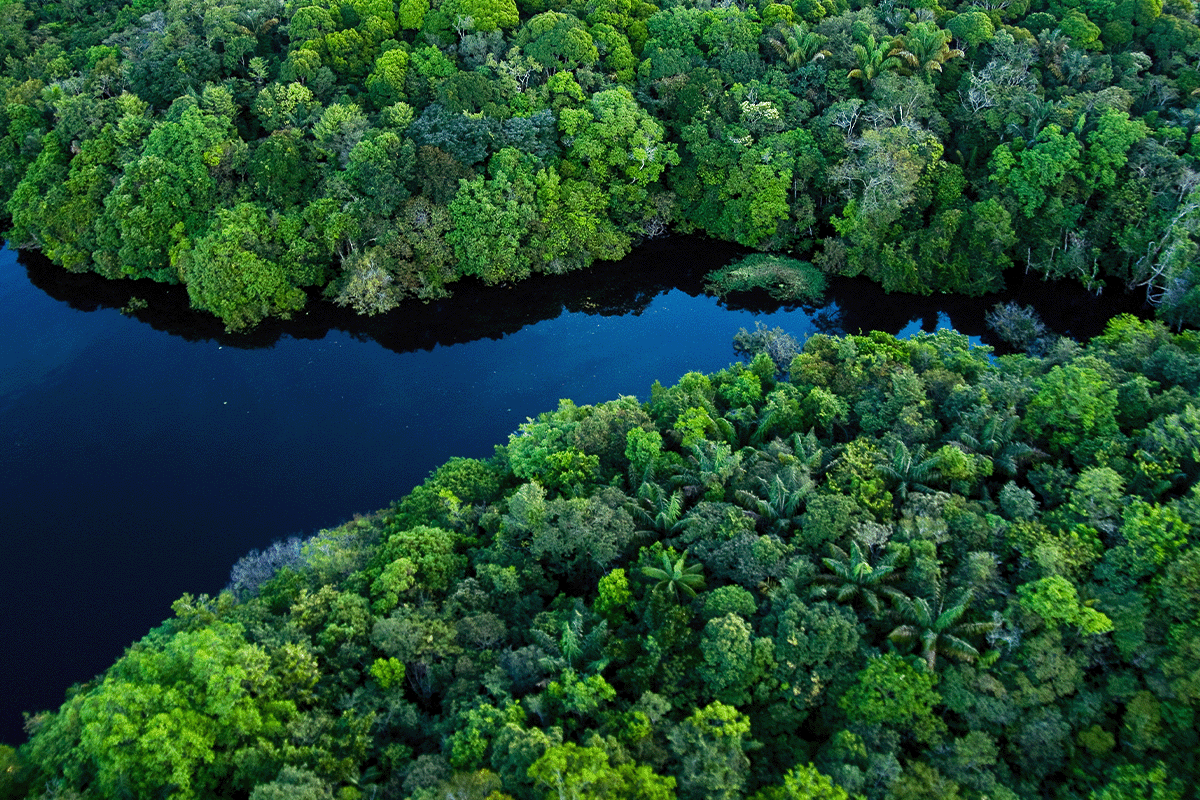
Rainforests are among the most biologically complex ecosystems on Earth because they contain an extremely dense concentration of life forms interacting through hidden survival networks, and unlike simpler ecosystems where a few species dominate, rainforests operate as multilayered biological systems where plants, animals, fungi, insects, and microorganisms coexist in tightly connected relationships, creating one of the most efficient and diverse ecological structures known in nature.
🌿 Structure of Rainforest Ecosystems
Rainforests are typically divided into multiple vertical layers including the emergent layer, canopy, understory, and forest floor, and each layer supports different types of life adapted to specific light, humidity, and temperature conditions, while the canopy layer alone contains the majority of plant and animal activity, acting like a “living roof” where most photosynthesis, feeding, and movement occurs, making rainforest ecosystems vertically structured biological cities rather than flat landscapes.
🌱 Why Rainforests Have Extreme Biodiversity
Rainforests contain extremely high biodiversity because they provide stable warm temperatures, consistent rainfall, and long-term environmental stability, allowing species to evolve and specialize into narrow ecological roles over millions of years, and this specialization leads to millions of interdependent relationships where plants depend on specific insects for pollination, animals depend on specific plants for food, and fungi break down organic matter to recycle nutrients back into the system.
🐒 Survival Networks Between Species
One of the most fascinating aspects of rainforest ecosystems is the presence of complex survival networks where species indirectly support each other’s survival, such as trees producing fruits that feed animals, animals spreading seeds through digestion, insects pollinating flowers, and predators controlling population balance, and these interactions create a continuous cycle of dependency that keeps the ecosystem stable and self-sustaining.
🌳 Plant Competition and Chemical Warfare
Plants in rainforests compete intensely for sunlight, nutrients, and space, and many species develop chemical defense systems to protect themselves from herbivores and competing plants, releasing toxins, bitter compounds, or growth-inhibiting chemicals into the environment, while some trees even form symbiotic relationships with fungi and ants for protection, showing that plant life in rainforests is highly active and strategic rather than passive.
🐍 Hidden Predators and Stealth Adaptation
Rainforests contain a wide range of predators including big cats, snakes, birds of prey, amphibians, and insects, many of which rely on camouflage, silence, and ambush strategies to survive in dense vegetation where visibility is limited, and this creates a highly competitive environment where survival depends on adaptation, patience, and environmental awareness rather than speed alone.
🐝 Insects: The Silent Engine of the Rainforest
Insects are the most abundant and diverse group in rainforests, performing essential ecological roles such as pollination, decomposition, and nutrient recycling, and without insects rainforest ecosystems would collapse, as they are responsible for maintaining plant reproduction, breaking down organic matter, and supporting food chains for larger animals, making them the invisible foundation of rainforest survival systems.
🌧️ Climate Regulation and Global Importance
Rainforests play a crucial role in regulating Earth’s climate by absorbing carbon dioxide, producing oxygen, and influencing rainfall patterns through evapotranspiration, where trees release water vapor into the atmosphere that contributes to cloud formation and global weather systems, making rainforests essential not only locally but also for global climate stability.
🦋 Rare Species and Evolutionary Isolation
Many rainforest species are found nowhere else on Earth because geographic isolation and stable environmental conditions allow unique evolutionary paths, resulting in highly specialized organisms with unique survival traits, and this isolation leads to constant biological innovation where new species evolve to fill very specific ecological roles.
⚠️ Threats to Rainforest Ecosystems
Rainforests are rapidly declining due to deforestation, logging, agriculture expansion, mining, and climate change, and this destruction not only leads to loss of biodiversity but also disrupts global climate systems, reduces medicinal plant discovery potential, and breaks complex ecological networks that took millions of years to develop.
🧬 Scientific Value of Rainforest Biodiversity
Rainforests are considered one of the most important sources for scientific discovery because they contain millions of species that have not yet been studied, including plants with potential medicinal compounds, insects with unique biological mechanisms, and microorganisms that could lead to new technologies in medicine, agriculture, and environmental science.
🌿 Conclusion
Rainforest ecosystems are not just forests—they are highly advanced living networks where every organism plays a specific role in maintaining balance, stability, and survival, and their biodiversity represents one of the most complex biological systems on Earth, making rainforests essential for global ecology, climate regulation, and future scientific discovery.
❓ FAQ
1. Why are rainforests so biodiverse?
Because they have stable climates and long-term evolutionary conditions.
2. What is the most important layer of the rainforest?
The canopy layer, where most life activity occurs.
3. Why are insects important in rainforests?
They support pollination, decomposition, and food chains.
4. How do rainforests affect climate?
They regulate rainfall and absorb carbon dioxide.
5. Why are rainforests disappearing?
Due to deforestation, agriculture, and industrial expansion.