




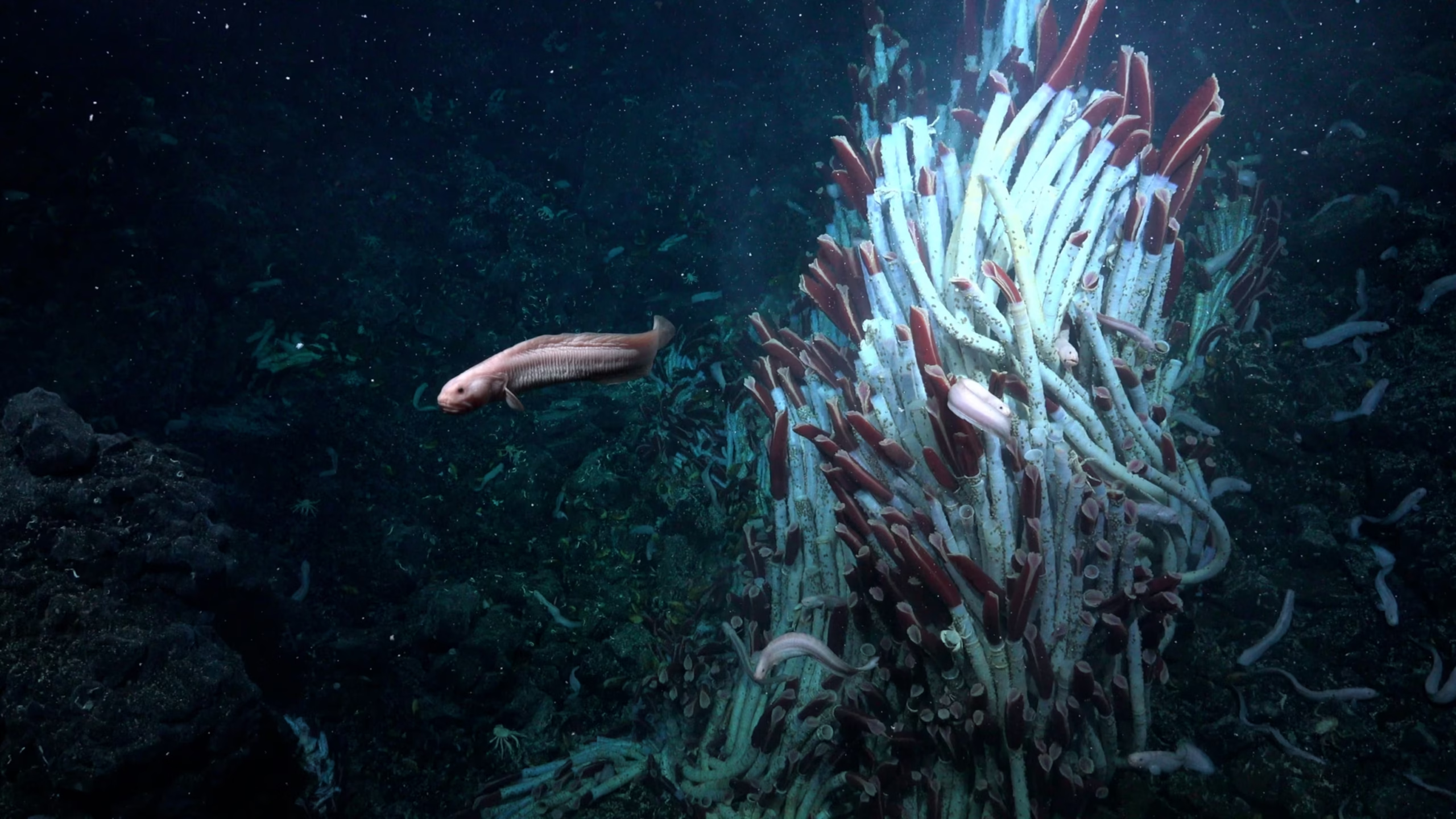
Deep ocean ecosystems represent one of the most extreme and least explored environments on Earth. Beneath the sunlit surface layer of the ocean lies a vast dark world where sunlight never reaches, temperatures approach freezing, and pressure becomes hundreds of times greater than at sea level. Despite these harsh conditions, life not only exists in the deep sea but thrives in highly specialized and often bizarre forms.
These ecosystems challenge traditional biological understanding because they operate independently of sunlight-based energy systems. Instead, many deep-sea communities rely on chemical energy sources, particularly around hydrothermal vents, methane seeps, and mineral-rich ocean floors. This creates ecosystems that resemble alien worlds, yet are fully functional biological systems on Earth.
This guide explores deep ocean structure, hydrothermal vent systems, pressure adaptation, biological survival strategies, unique organisms, energy cycles, and ecological significance in scientific depth.
Structure of the Deep Ocean Environment
The ocean is divided into distinct depth zones, each with unique physical conditions.
Mesopelagic Zone
Also called the twilight zone, this region receives minimal sunlight:
- Light is extremely weak
- Photosynthesis is almost impossible
- Temperature drops significantly
Many organisms here rely on vertical migration and detritus falling from above.
Bathypelagic Zone
Known as the midnight zone:
- Complete darkness
- Near-freezing temperatures
- Extreme pressure conditions
Life here is entirely dependent on non-solar energy sources.
Abyssopelagic and Hadal Zones
These are the deepest regions:
- No natural light
- Pressure can exceed 1,000 times atmospheric levels
- Found in deep trenches and ocean basins
Despite these conditions, microbial and animal life persists.
Hydrothermal Vents and Chemical Energy Systems
One of the most important discoveries in deep ocean science is hydrothermal vent ecosystems.
Formation of Hydrothermal Vents
Hydrothermal vents form when:
- Seawater seeps into cracks in the ocean floor
- It is heated by magma beneath the crust
- Superheated water rich in minerals is expelled back into the ocean
This creates underwater geysers on the seafloor.
Chemical Composition
Vent fluids contain:
- Hydrogen sulfide
- Methane
- Iron and sulfur compounds
- Dissolved metals
These chemicals form the basis of an alternative energy system for life.
Chemosynthesis
Unlike surface ecosystems that rely on photosynthesis, vent ecosystems rely on chemosynthesis.
In this process:
- Bacteria convert chemical compounds into energy
- This energy supports entire food webs
- No sunlight is required
This system proves that life can exist independently of solar energy.
Pressure Adaptation and Extreme Physics of Life
Deep ocean organisms live under extreme pressure conditions.
Pressure Increase with Depth
Pressure increases by approximately:
- 1 atmosphere every 10 meters of depth
At extreme depths, pressure becomes:
- Hundreds to over a thousand times surface pressure
Biological Adaptations
To survive these conditions, deep-sea organisms develop:
- Flexible cell membranes
- Pressure-resistant proteins
- Reduced skeletal structures
- Gel-like body compositions
These adaptations prevent cellular collapse.
Enzyme Stability
Proteins and enzymes in deep-sea organisms are specially structured to:
- Function under extreme compression
- Maintain biochemical reactions
- Resist structural deformation
Deep Ocean Food Chains and Energy Flow
Deep ocean ecosystems operate differently from surface ecosystems.
Marine Snow
A major energy source is marine snow:
- Organic particles falling from surface waters
- Dead plankton, waste material, and debris
- Continuous slow nutrient supply
This supports many deep-sea organisms.
Vent-Based Food Chains
Around hydrothermal vents:
- Chemosynthetic bacteria form the base of the ecosystem
- These bacteria support worms, crustaceans, and mollusks
- Larger predators feed on these organisms
This creates isolated but highly productive ecosystems.
Unique Deep-Sea Organisms and Adaptations
Deep ocean life has evolved extraordinary biological traits.
Bioluminescence
Many organisms produce their own light through chemical reactions.
This light is used for:
- Attracting prey
- Communication
- Camouflage (counter-illumination)
Gigantism and Miniaturization
Some species exhibit:
- Deep-sea gigantism (larger body sizes)
- Extreme miniaturization in others
These adaptations relate to energy efficiency and survival strategies.
Sensory Adaptation
Due to darkness, many organisms rely on:
- Enhanced smell
- Vibration detection
- Electroreception
Vision is often reduced or specialized.
Hydrothermal Vent Communities and Ecosystem Isolation
Vent ecosystems are biologically unique.
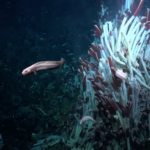
Giant Tube Worms
These organisms:
- Have no digestive system
- Rely entirely on symbiotic bacteria
- Live near vent openings
Vent Crabs and Shrimp
These species:
- Feed on bacteria or vent minerals
- Tolerate toxic chemical environments
- Thrive in high-temperature gradients
Ecosystem Isolation
Vent ecosystems are often:
- Geographically isolated
- Genetically unique
- Highly specialized
Each vent system may evolve differently over time.
Ocean Floor Geological Activity
The deep ocean floor is geologically active.
Mid-Ocean Ridges
These are underwater mountain chains where:
- New oceanic crust is formed
- Magma rises from mantle layers
- Tectonic plates separate
Subduction Zones
At these zones:
- One plate sinks beneath another
- Deep ocean trenches form
- Volcanic activity is triggered
These processes shape deep ocean habitats.
Microbial Life in Extreme Conditions
Microorganisms dominate deep ocean ecosystems.
Extremophiles
These are organisms that survive in:
- Extreme pressure
- Toxic chemicals
- Low nutrient conditions
They form the base of many deep ecosystems.
Genetic Adaptation
Deep-sea microbes show:
- Unique metabolic pathways
- Specialized enzymes
- High survival efficiency
They are of great interest in biotechnology research.
Role of Deep Ocean in Global Systems
Deep ocean ecosystems are not isolated; they influence the entire planet.
Carbon Cycling
The deep ocean:
- Stores large amounts of carbon
- Regulates atmospheric CO₂ levels
- Acts as a long-term carbon sink
Climate Regulation
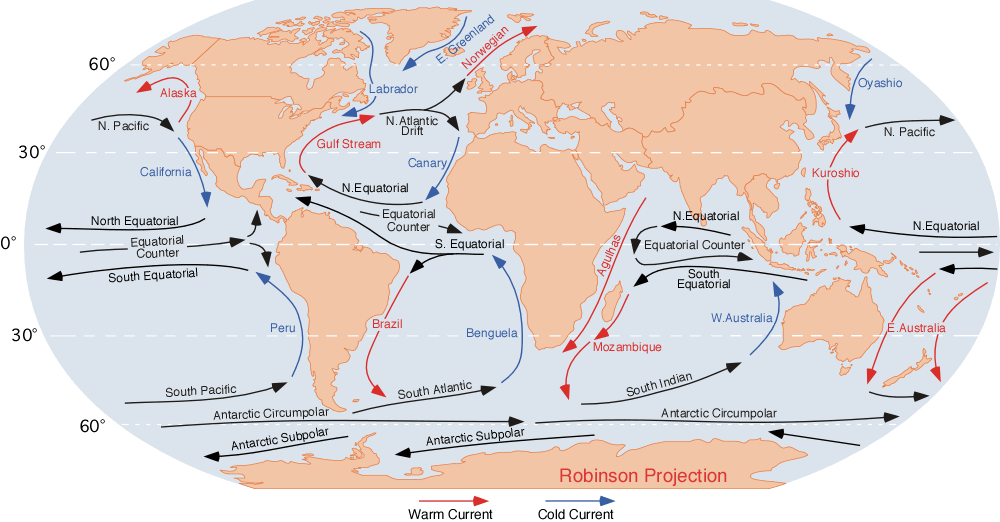
Ocean currents and deep water circulation:
- Distribute heat globally
- Influence weather systems
- Stabilize climate patterns
Nutrient Recycling
Deep ocean systems recycle:
- Organic matter
- Minerals
- Biological waste
This supports long-term ocean productivity.
Scientific Exploration and Discovery Challenges
The deep ocean remains one of the least explored environments.
Technological Limitations
Exploration is difficult due to:
- Extreme pressure
- Darkness
- Remote locations
Submersible Technology
Modern exploration uses:
- Deep-sea submersibles
- Remote-operated vehicles (ROVs)
- High-pressure sensors
Ongoing Discoveries
Scientists continue discovering:
- New species
- New chemical processes
- Unknown ecosystems
Human Impact on Deep Ocean Systems
Human activity is beginning to affect deep ocean environments.
Pollution
Microplastics and chemicals now reach:
- Deep ocean trenches
- Vent ecosystems
- Remote marine habitats
Deep-Sea Mining
Mining for minerals threatens:
- Fragile ecosystems
- Slow-growing organisms
- Undiscovered biodiversity
Climate Change Effects
Ocean warming impacts:
- Circulation patterns
- Oxygen levels
- Deep-sea food supply
Conclusion
Deep ocean ecosystems represent one of the most extreme and complex environments on Earth, where life survives without sunlight and adapts to immense pressure, darkness, and chemical-rich conditions. These systems rely on alternative energy pathways such as chemosynthesis and marine snow, supporting unique organisms that challenge our understanding of biology.
Far from being empty or lifeless, the deep ocean is a vast, dynamic world filled with specialized ecosystems that play a critical role in global climate regulation, carbon cycling, and biological diversity. As exploration continues, it becomes increasingly clear that the deep sea is not only one of Earth’s final frontiers but also one of its most important ecological systems.