


The Immune System: Biological Defense Network – Cells, Antibodies & Disease Protection Systems

The Immune System: Biological Defense Network – Cells, Antibodies & Disease Protection Systems

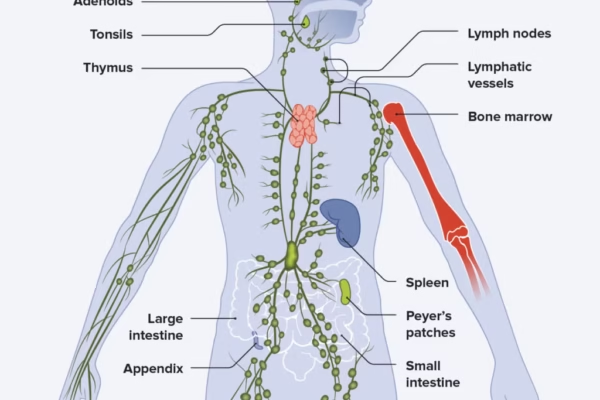
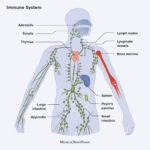
The immune system is the body’s highly advanced biological defense network, responsible for identifying, neutralizing, and eliminating harmful invaders such as bacteria, viruses, parasites, and abnormal cells. It operates as a constantly active surveillance system that distinguishes between “self” and “non-self,” protecting the organism from infection while maintaining internal stability. Unlike a single organ, the…

Read More
Trees: Planetary Life Support Systems – Forest Communication, Carbon Storage & Ecological Balance Science

Trees: Planetary Life Support Systems – Forest Communication, Carbon Storage & Ecological Balance Science

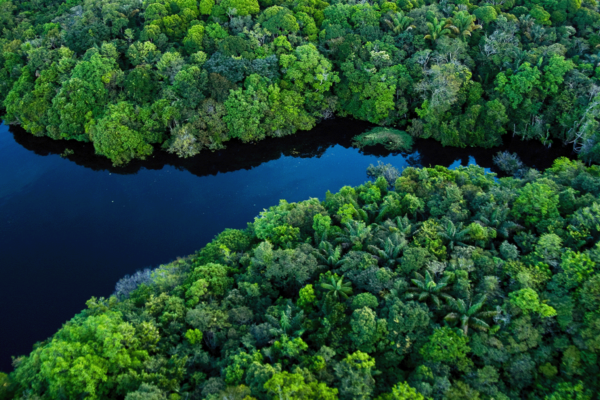
Trees are among the most important living systems on Earth, functioning as biological infrastructure for the planet. They regulate climate, stabilize ecosystems, support biodiversity, and form complex underground and above-ground networks that connect entire forests. Far from being passive organisms, trees actively respond to environmental conditions, communicate chemically, and manage resources across large ecological scales….

Read More
Human Impact on Ecosystems: Deforestation, Climate Change & Biodiversity Collapse

Human Impact on Ecosystems: Deforestation, Climate Change & Biodiversity Collapse

Human activity has become one of the strongest forces shaping Earth’s ecosystems because industrial development, agriculture expansion, urbanization, and resource extraction have fundamentally changed natural landscapes at a global scale, and unlike slow natural ecological changes that occur over thousands of years, human-driven changes often happen within decades, giving ecosystems very little time to adapt,…

Read More
Poisonous vs Medicinal Plants: Nature’s Chemical Warfare – Defense Systems, Healing Compounds & Survival Biology

Poisonous vs Medicinal Plants: Nature’s Chemical Warfare – Defense Systems, Healing Compounds & Survival Biology

Plants are often seen as passive organisms, but in reality they are highly active chemical factories that produce thousands of compounds to defend themselves, compete with other species, and survive in harsh environments, and these same chemicals can be either toxic or medicinal depending on dosage, preparation, and biological interaction, making plants one of the…

Read More
Ocean Currents: Planetary Circulation System – Heat Transport, Climate Control & Marine Dynamics

Ocean Currents: Planetary Circulation System – Heat Transport, Climate Control & Marine Dynamics

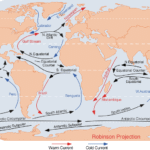
Ocean currents are continuous, directed movements of seawater that circulate across the planet’s oceans, forming a vast global conveyor system. These currents act as Earth’s heat distribution network, transferring energy from warm equatorial regions toward colder polar areas and maintaining global climate balance. Driven by wind, temperature differences, salinity gradients, and Earth’s rotation, ocean currents…

Read More
Insect Superorganisms: Ants, Bees & Termites – Collective Intelligence, Colony Science & Survival Systems

Insect Superorganisms: Ants, Bees & Termites – Collective Intelligence, Colony Science & Survival Systems

Insect superorganisms are among the most advanced biological systems in nature because they function not as individual insects but as unified living societies where thousands or even millions of members behave like a single coordinated entity, and unlike solitary animals that depend on individual intelligence, insects such as ants, bees, and termites achieve survival through…

Read More
Forests & Medicinal Plants: Nature’s Pharmacy – Healing Science, Biodiversity & Human Survival

Forests & Medicinal Plants: Nature’s Pharmacy – Healing Science, Biodiversity & Human Survival

Forests are not just collections of trees; they are some of the most complex living systems on Earth, containing millions of species interacting in hidden biological networks, and among their most valuable contributions to human life is the existence of medicinal plants that have been used for thousands of years to treat diseases, heal injuries,…

Read More
Fungi: Hidden Kingdom of Nature – Decomposition, Chemical Networks & Ecosystem Recycling Systems

Fungi: Hidden Kingdom of Nature – Decomposition, Chemical Networks & Ecosystem Recycling Systems

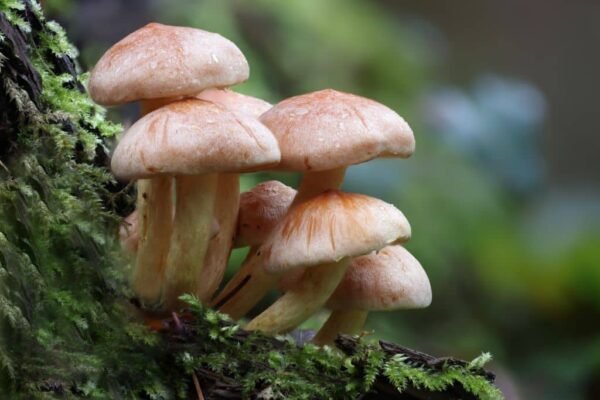
Fungi represent one of the most essential yet often overlooked kingdoms of life. They are neither plants nor animals, but a completely separate group of organisms with unique biological functions that are critical for ecosystem stability. Fungi include mushrooms, molds, yeasts, and vast underground networks that span entire forests. Unlike plants, fungi do not produce…

Read More
Photosynthesis: Solar Energy Conversion – Plant Chemistry, Oxygen Production & Global Life Systems

Photosynthesis: Solar Energy Conversion – Plant Chemistry, Oxygen Production & Global Life Systems

Photosynthesis is the fundamental biological process that converts sunlight into usable chemical energy, powering nearly all life on Earth either directly or indirectly. It occurs primarily in plants, algae, and certain bacteria, and it forms the foundation of global food chains and atmospheric oxygen production. Without photosynthesis, Earth would not sustain complex life, as energy…

Read More